
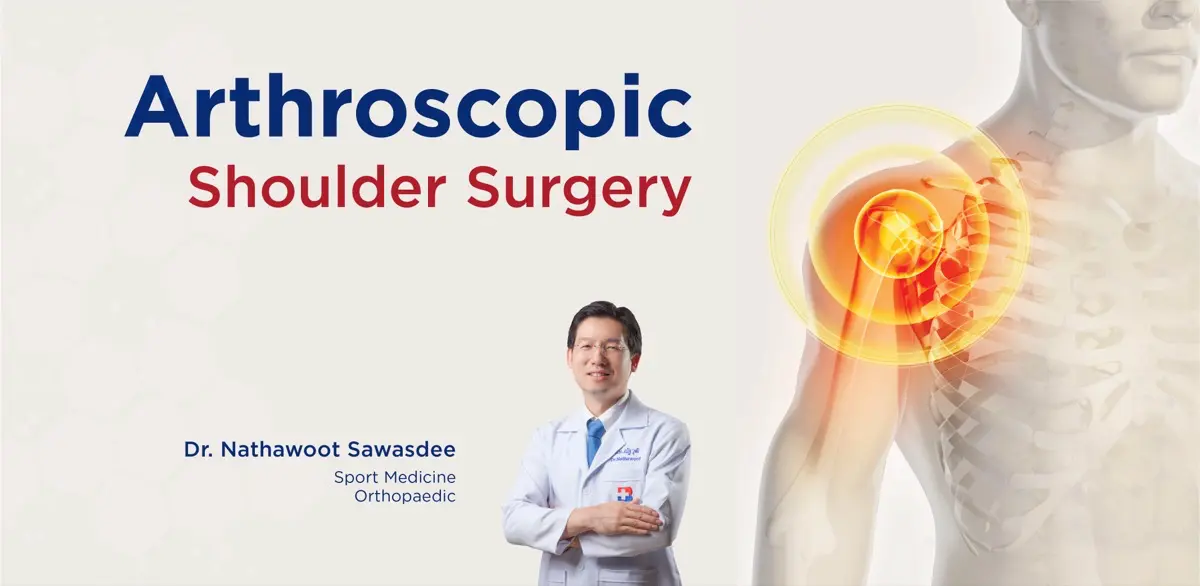
The shoulder joint is the large, major joint connecting the upper arm bone to the scapula, allowing a wide range of motion at the upper limb. Disease or injury to the shoulder joint can cause pain, swelling, difficulty moving, or weakness.
2 main treatment options for shoulder injuries, depending on its severity
- Non-surgical treatment: Often used in patients with mild symptoms. Non-surgical treatment includes painkillers, muscle relaxants, physical therapy or steroid injections.
- Surgical treatment: Often used in patients with severe symptoms or in cases where non-surgical treatments are ineffective. The damaged structures within the shoulder are repaired replaced.
Arthroscopic shoulder surgery is a minimally invasive surgery that uses a tiny camera to look inside the shoulder joint. This lessens the possibility of damage to adjacent tissue by enabling the surgeon to see the operative site more clearly.
Preparation for Surgery
For the purposes of determining the severity of the illness and planning surgery, patient must undergo further physical examinations such as computed tomography and magnetic resonance imaging prior to surgery.
Surgical Procedure
Arthroscopic shoulder surgery takes approximately 2-3 hours. During the surgery, a surgeon makes an incision only about 1-2 centimeters in the shoulder. An arthroscope and small instruments are then inserted into the shoulder in order to perform the procedures according to the purpose of the surgery, such as
- Trimming damaged articular cartilage
- Repairing or replacing a torn ligament or muscle
- Trimming and repairing abnormal bone or cartilage
- Removing any loose bone or tissue fragments blocking motion
Postoperative Self-Care
After surgery, the patient needs to stay in the hospital for approximately 1-2 days to recover. The doctor will schedule check-ups and follow-ups with patient periodically. Postoperative self-care is as follows.
- Strictly follow your doctor’s instructions
- Elevate your arms above your heart to reduce swelling
- Apply a cold compress to the hip every 4-6 hours to reduce swelling and pain
- Take your medicine as prescribed
- Learn exercises to the muscles around the shoulder joint as recommended by your doctor
Common Postoperative Complications
- Shoulder pain
- swell
- Bruises
- Infection
- Entrapment neuropathy
- Bleeding
- Frozen shoulder
Postoperative Recovery
The recovery period after arthroscopic shoulder surgery depends on the severity of condition. Patients can generally resume their work or other normal activities within 3-6 months.
Advantages
- Small incision with shorter recovery period
- Clear vision of surgical area lessens the possibility of damage to adjacent tissue
- Better results, allowing most patients to resume their normal lives
Disadvantages
- Higher cost compared to open surgery with a large incision
- Patients may experience slight shoulder pain after surgery
Indications
- Shoulder diseases or injuries for which non-surgical treatment is ineffective
- Shoulder diseases or injuries that may result in frozen shoulder of surgery is not performed.


 Line Official Account

 076 254 425